Commercial Real Estate
Interpreting Accessory Dwelling Units: Alberta Court of Appeal Clarifies Municipal Bylaw Definitions
December 11, 2025
Land use planning disputes often turn on the interpretation of key terms within municipal bylaws. The May 2025 decision of the Alberta Court of Appeal in Mattson v. Rocky View (County) offers essential guidance on how discretionary uses (particularly Accessory Dwelling Units) should be interpreted under municipal land use frameworks. This ruling is particularly relevant to developers, municipalities, and property owners seeking clarity on how land use bylaws regulate housing density and secondary dwellings in residential rural zones.
Development Permit Dispute in Rocky View County
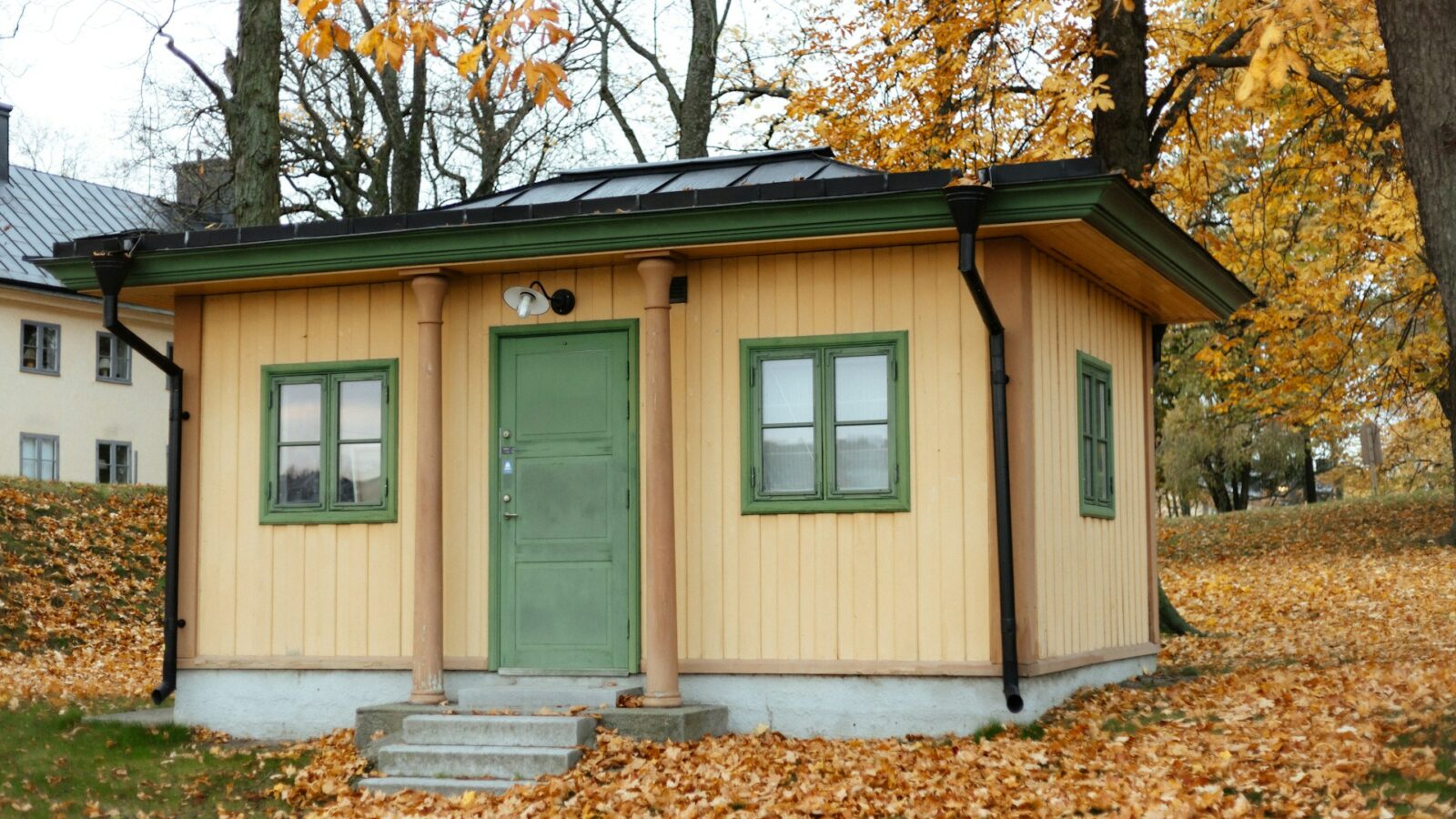
The case arose from a dispute over the issuance of a development permit by Rocky View County for the construction of a second detached dwelling on a 1.87-hectare residential rural property. The landowner (the respondent) already had a primary single detached dwelling on the site and sought to build a smaller second dwelling to accommodate her mother. The application described the second unit as a “guest house,” and it was submitted for approval as an “Accessory Dwelling Unit”: a discretionary use permitted under the County’s Land Use Bylaw (the “Bylaw”).
The development authority approved the application, granting relaxations for the height of the accessory building and parcel coverage. A neighbouring landowner (the appellant) appealed the approval to the Subdivision and Development Appeal Board (SDAB), arguing that the second structure was not an Accessory Dwelling Unit but rather a second “Dwelling, Single Detached.” If so, it would violate section 320(a) of the Bylaw, which limits the maximum density to one single detached dwelling and one other dwelling unit that is not a single detached dwelling.
The SDAB dismissed the appeal, finding that the proposed second dwelling met the definition of an Accessory Dwelling Unit and would not unduly interfere with the amenities or enjoyment of the surrounding neighbourhood.
The appellant landowner was granted permission to appeal to the Alberta Court of Appeal, limited to the question of whether the SDAB erred in its interpretation of the term “Accessory Dwelling Unit” as defined in the Bylaw.
Key Issue on Appeal: Definition and Density
At the heart of the appeal was whether the SDAB misinterpreted the Bylaw by allowing what the appellant viewed as a second fully detached house under the guise of an accessory use. The appellant contended that the definition of “Accessory Dwelling Unit” should be narrowly interpreted to mean suites contained within another structure (such as basement or garage suites), not freestanding dwellings. Because both dwellings were detached, supported by permanent foundations, and exceeded the minimum size threshold for “Dwelling, Single Detached,” Mattson argued that the second structure violated the density restrictions of section 320(a).
The respondents, including the County and the property owner, countered that the definitions within the Bylaw supported a broader interpretation. In their view, the second dwelling was subordinate in size and purpose, and therefore appropriately categorized as an Accessory Dwelling Unit, even though it was located within a freestanding building.
Court of Appeal’s Analysis: Applying Modern Statutory Interpretation
The Court began its analysis by reaffirming the applicable standard of review. Interpretation of municipal bylaws is a question of law, reviewed on a standard of correctness. The Court then adopted the modern approach to statutory interpretation, emphasizing the need to read legislative words in their entire context and in harmony with the object and scheme of the Bylaw.
In reviewing the language of the Bylaw, the Court noted that:
- A “Dwelling” or “Dwelling Unit” is defined broadly as a building or portion of a building intended as a permanent residence, complete with cooking, sleeping, and sanitary facilities.
- A “Dwelling, Single Detached” is a dwelling supported on a permanent foundation with a minimum gross floor area.
- An “Accessory Dwelling Unit” is defined as a subordinate dwelling unit that may be located within either a principal building or an accessory building. The definition expressly allows for accessory dwellings external to the principal building, provided they are subordinate and supported by a permanent foundation.
The Court rejected the appellant’s argument that an accessory dwelling must be contained within another structure. Instead, it held that the plain language of the Bylaw permitted an accessory dwelling to occupy the entirety of an accessory building, so long as it remained subordinate in size and use to the principal building.
Further, the Court clarified that while both the primary and accessory dwellings may meet the definition of “Dwelling, Single Detached,” this does not preclude the latter from being simultaneously categorized as an “Accessory Dwelling Unit.” These definitions are not mutually exclusive, and the proper categorization depends on function and subordination, not merely structural characteristics.
Density Restrictions and Discretion
The appellant also relied on section 320(a), which limits density in rural residential districts to one “Dwelling, Single Detached” and one “other Dwelling Unit” that is not a Dwelling, Single Detached. The appellant argued that allowing a second structure that independently qualifies as a single detached dwelling would defeat this purpose.
The Court disagreed, stating that section 320(a) does not override or redefine the classes of permissible uses found elsewhere in the Bylaw. Instead, it sets a general density limit that contemplates a combination of one primary detached dwelling and one subordinate unit, regardless of whether the latter technically meets the physical criteria of a single detached dwelling.
Notably, the Court emphasized that section 320(a) must be interpreted alongside section 687(3)(d) of the Municipal Government Act. This provision empowers the SDAB to approve a development that does not strictly comply with the Bylaw, provided it aligns with the general land use intent and does not unduly interfere with neighbouring properties. In this case, the SDAB had expressly found that the proposed accessory dwelling met these conditions.
Practical Implications for Developers
The Mattson decision provides clarity and certainty on several important points:
Bylaw Definitions Are Not Mutually Exclusive
A dwelling may fall into multiple definitional categories. The critical inquiry is how the structure functions in relation to the principal use of the property.
Size and Subordination Matter
Courts and appeal boards will focus on whether an accessory dwelling is subordinate in size and use to the principal dwelling, not merely whether it is freestanding.
Statutory Interpretation Must Be Contextual
Narrow, restrictive readings of bylaw provisions, such as insisting that accessory units must be suites within other structures, are unlikely to succeed if they are not grounded in the actual language and purpose of the bylaw.
Discretionary Uses Are Flexible Tools
As long as the discretionary use conforms to the bylaw’s intent and does not harm neighbourhood amenities, boards have broad leeway to approve them, even where structural characteristics blur conventional boundaries.
Alberta’s Municipal Government Act Affords Important Discretion
Boards have the authority to approve developments that may require relaxation of certain standards, provided those decisions are reasoned and grounded in evidence.
A Balanced, Practical Approach to Land Use
The Alberta Court of Appeal’s decision in Mattson v. Rocky View (County) underscores the importance of applying land use bylaws with both precision and practicality. It reaffirms that courts and administrative boards must interpret planning documents in a way that reflects the actual language of the bylaws, the intent of municipal policy, and the evolving realities of land development.
For property owners, municipalities, and development professionals, Mattson serves as a reminder that secondary dwellings, whether located within or outside a principal structure, may be validly approved as long as they meet the functional and definitional requirements of the bylaw.
DBB Law: Providing Innovative Real Estate Development Solutions in Calgary
If you are navigating a development permit dispute, questioning the interpretation of a municipal bylaw, or preparing for an SDAB or court appeal, informed legal guidance is essential. The real estate lawyers at DBB Law advise property owners, developers, and municipalities on complex land use and planning matters, including density disputes, discretionary uses, and statutory interpretation issues. Contact us today online or call 403-265-7777 to discuss how we can help protect your project.